 Trading Reps
Lesson 18 of 31 · Zero to reading a chart
Time of Day in Trading: 9:40 Is Not 2:40
The same-sized move at 9:40 and at 2:40 is not the same event: the time of a move tells you the size of the crowd that made it, and the size of the crowd is part of what the move means.
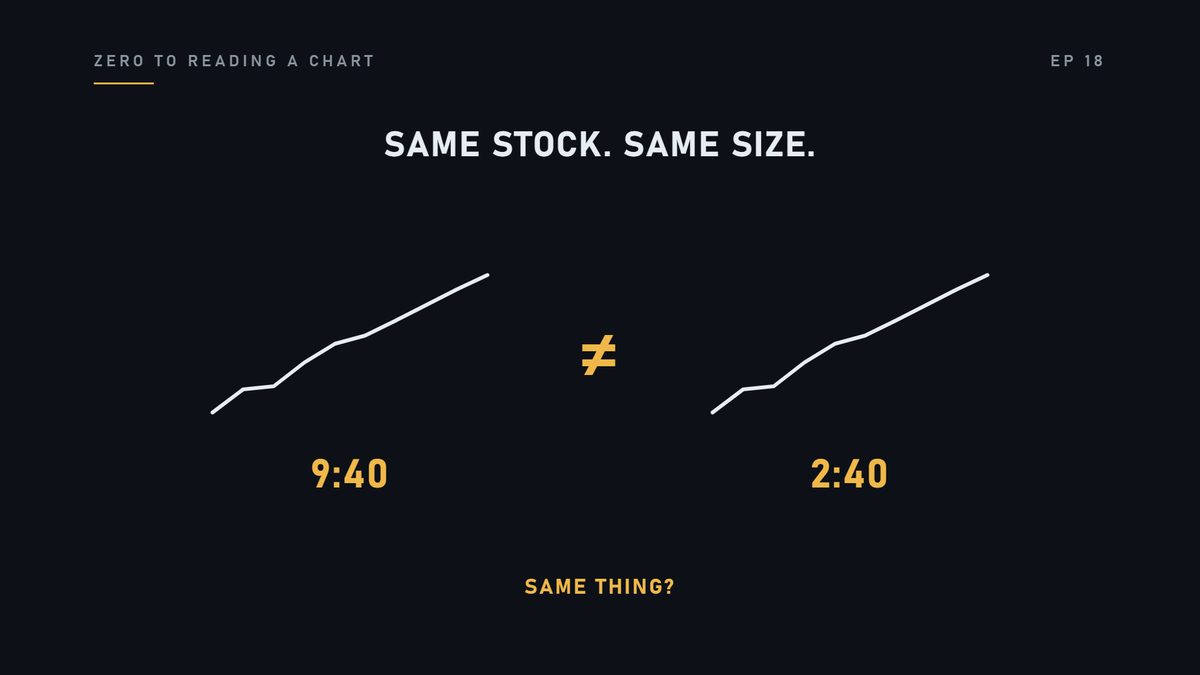
Two moves. Same stock. Same size. One at twenty to ten in the morning. One at twenty to three in the afternoon. Same thing?
Most people say a move is a move. It went up this much, and when does not matter.
It matters more than almost anything else on the screen.
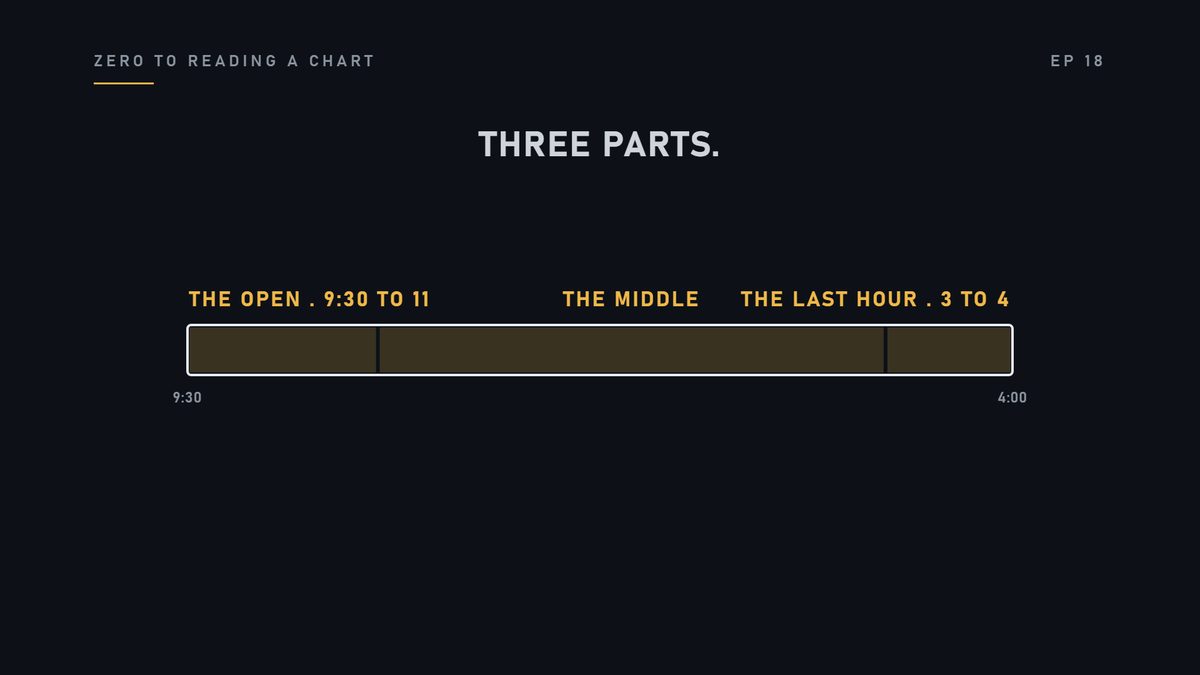
You know the day has three parts. The open, from nine thirty to about eleven. The quiet middle. And the last hour.
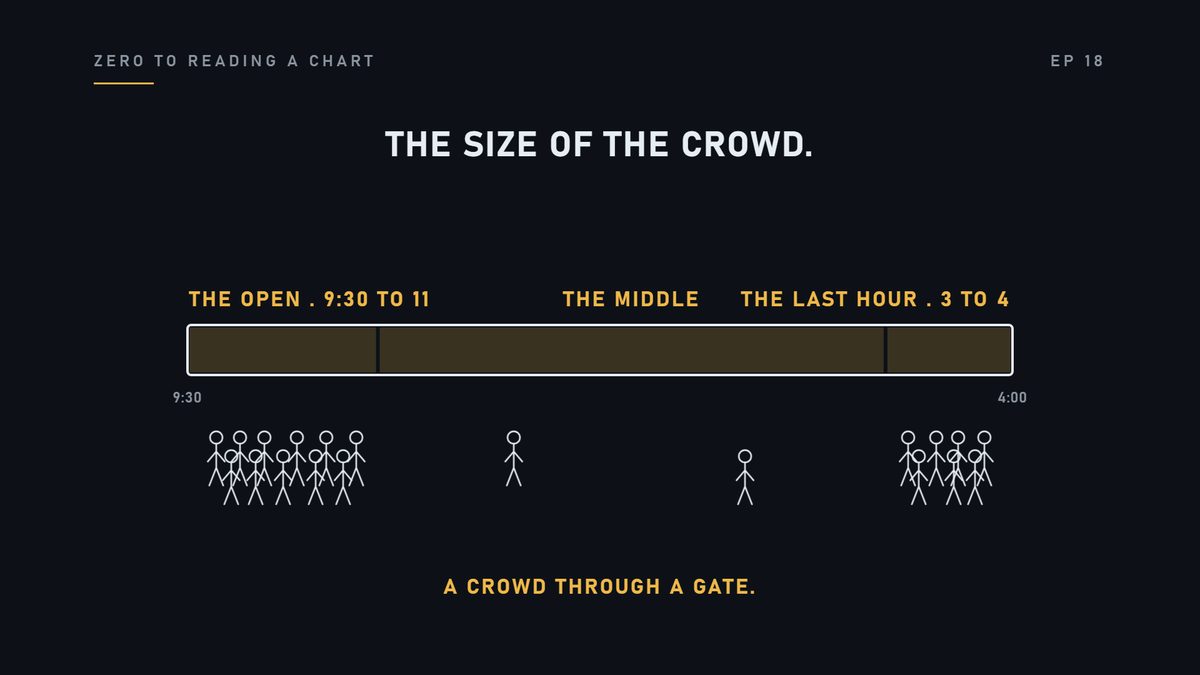
And you know the open is a crowd pouring through a gate. Now watch what the size of the crowd does to a move.
Think of a swimming pool. In the morning it is packed. Somebody jumps in. A big splash, and it is gone in a second. The water is already full of movement.
At two in the afternoon the pool is nearly empty. The same person jumps in. Same splash.
But now the ripples run all the way across. Nothing is there to cancel them out.
A move on a chart is a splash. How far it travels depends on how many people are in the pool. So does what it means.
At nine forty the pool is full. A move has to push through everyone.
At two forty most have gone. The same push travels further, and fewer people made it.
So the time of a move tells you the size of the crowd.
And the size of the crowd is part of what the move means.
Here is one real day. Look at the row underneath. The one that shows how much traded in each minute.
Tall at the open. It shrinks through the late morning.
Thin, thin, thin, all through the middle.
And then it grows again into the last hour. That is the shape of the crowd through the day.
Now here are two real moves. Same size, near enough.
This one started at nine forty. Look at the row underneath it: tall bars. Many people on both sides of every price.
This one started at two forty. Same distance travelled. Look underneath: a fraction of the crowd.
The chart drew the same shape twice. Two very different events made it.
The morning is crowded. The middle is quiet. The last hour fills up again.
A move at two forty was made by far fewer people. Fewer than the same move at nine forty.
Here is the mistake. Somebody reads a chart with the clock covered. They judge a move by its size alone.
Size is half the fact. The other half is when, because when tells you who was there.
This is not a rule about what to do at any time.
It is a habit. Before you decide what a move means, read the clock under it.
Next move you see on any chart, say the time out loud. Before you say anything else about it.
Remember this. The morning is crowded. The afternoon is quiet. Note the time whenever you look at a move.
Check yourself
- Name the three parts of the day.
- The open, the middle, the last hour.
- When is the crowd thinnest?
- The middle of the day.
- Which part is more crowded: 9:40 or 2:40?
- Nine forty. The open.
Next lesson: The row under the chart everyone ignores.
For learning only. Not financial advice, not signals, not stock picks.