 Trading Reps
Lesson 24 of 31 · Zero to reading a chart
The Spread: You Lose Money the Second You Buy
The spread is the ask minus the bid. Buy at the ask and sell at the bid in the same second and you are down exactly the spread - eight cents on a drawn quote, eighty dollars on a thousand shares - the cost of starting. A stock that trades all the time keeps its two prices close; one that hardly trades lets them drift wide.
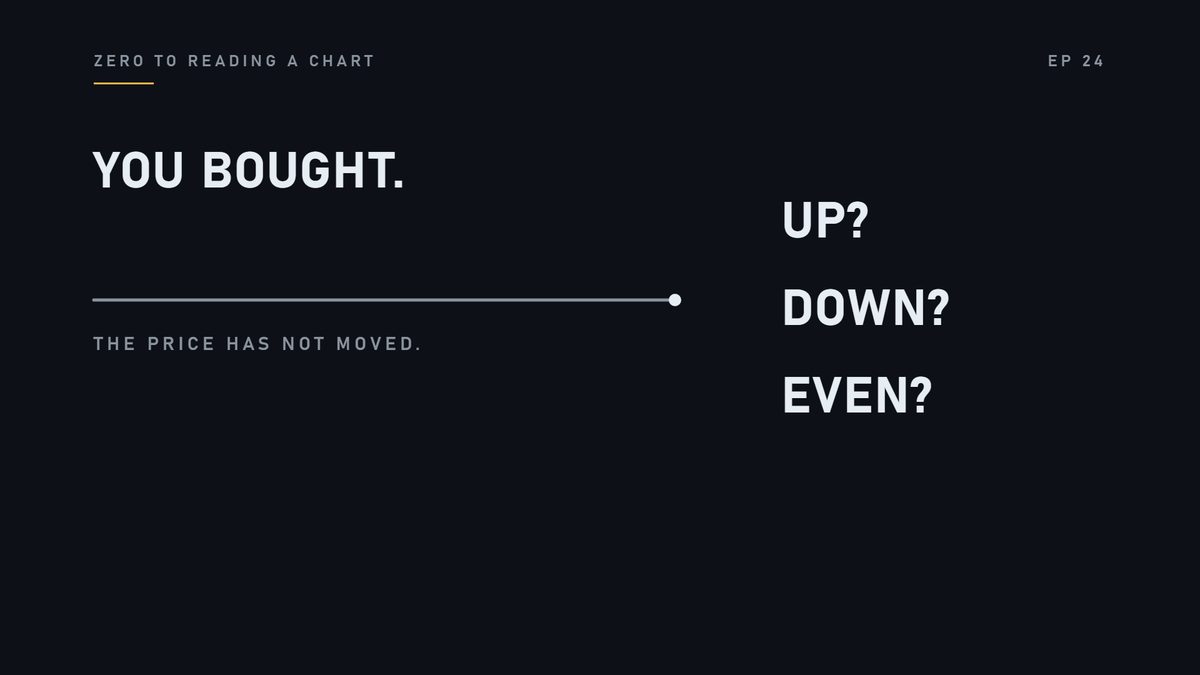
You just bought a stock. The price has not moved at all. Are you up, down, or even?
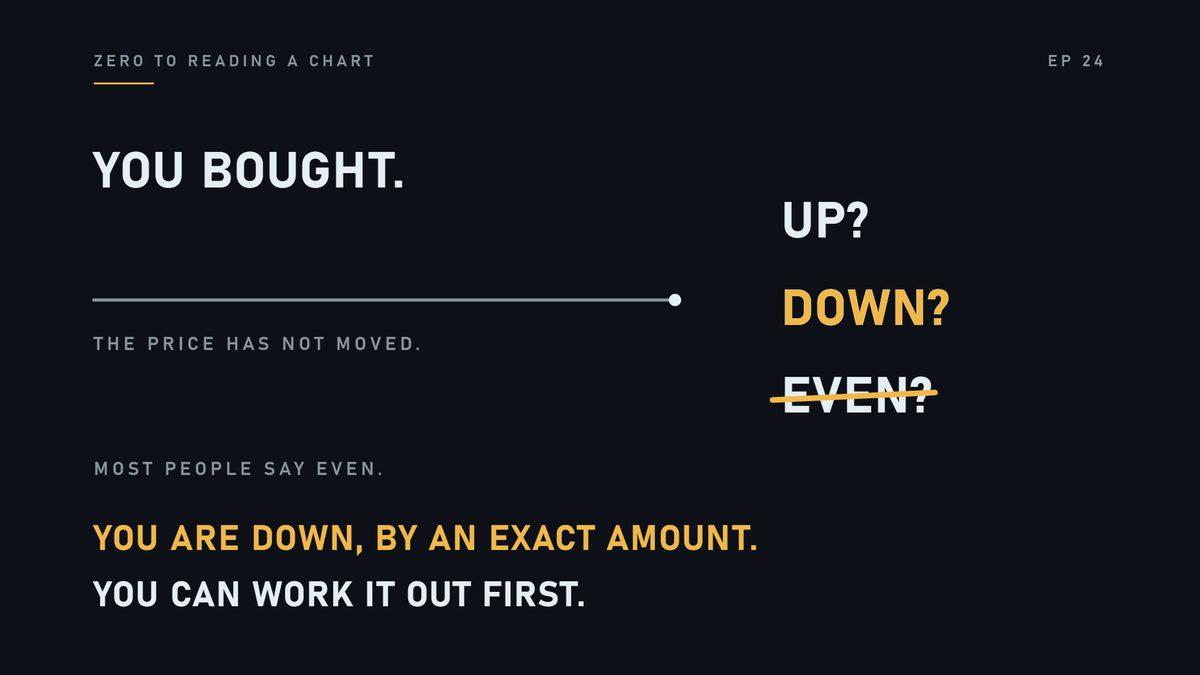
Most people say even. You are down, by an exact amount you can work out first.
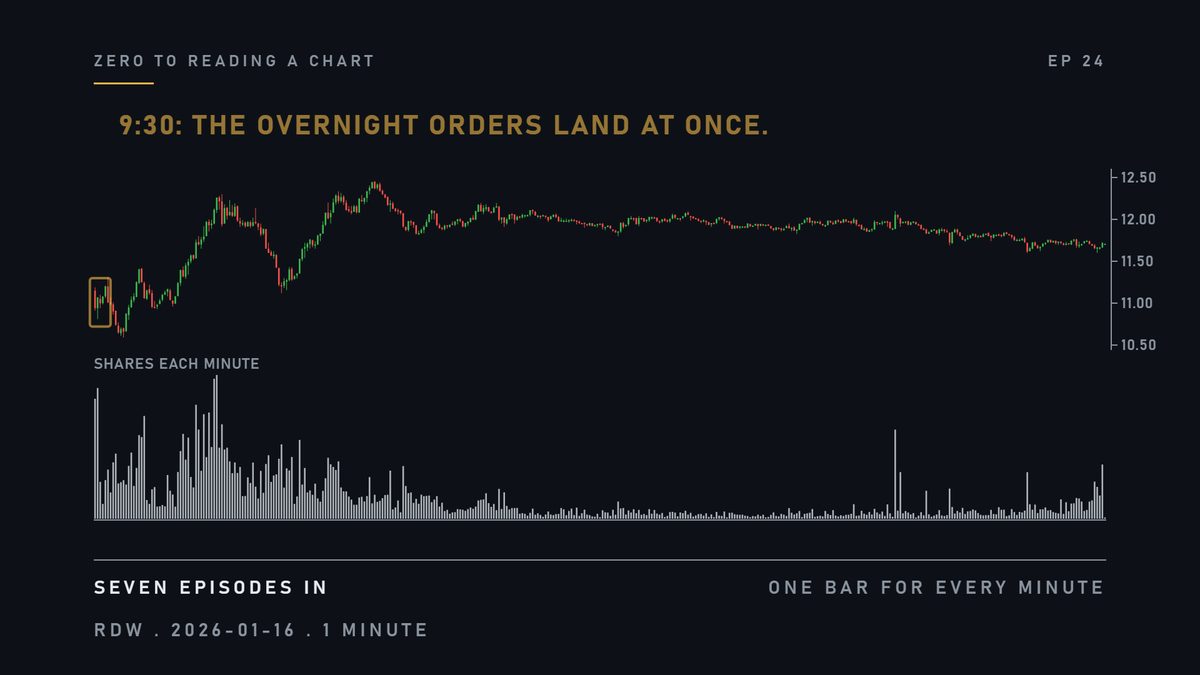
Here is what you can now read, from the last seven. At nine thirty, the overnight orders land at once.
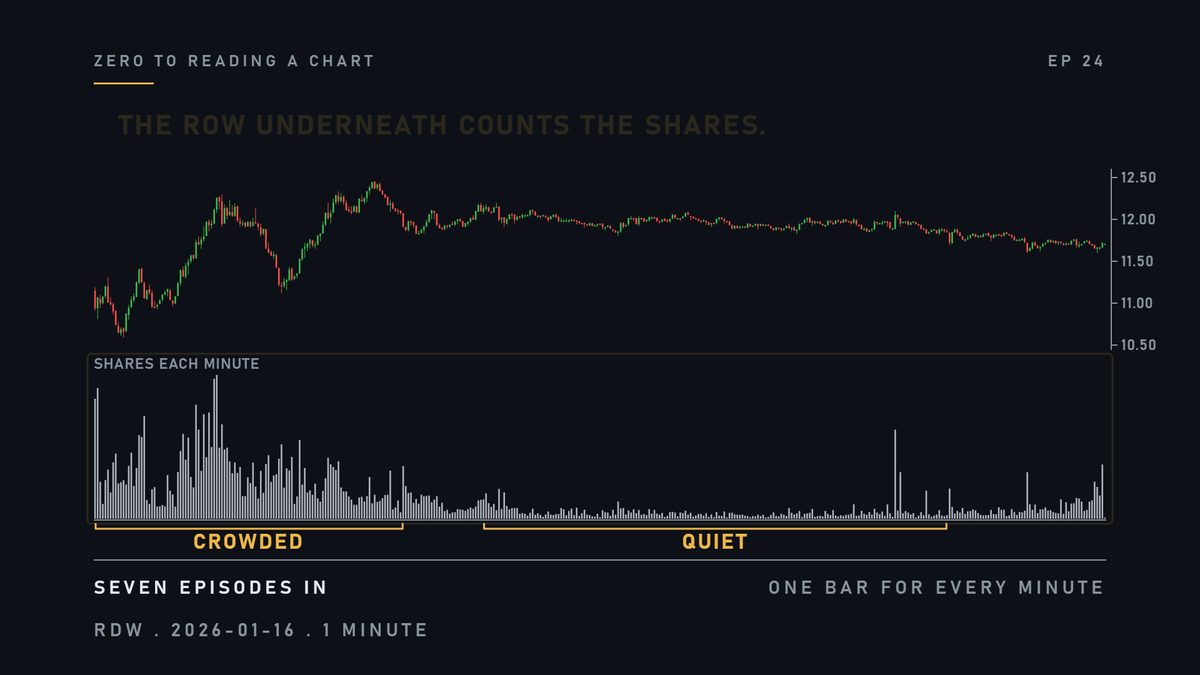
The morning is crowded, the afternoon quiet. The row underneath counts the shares.
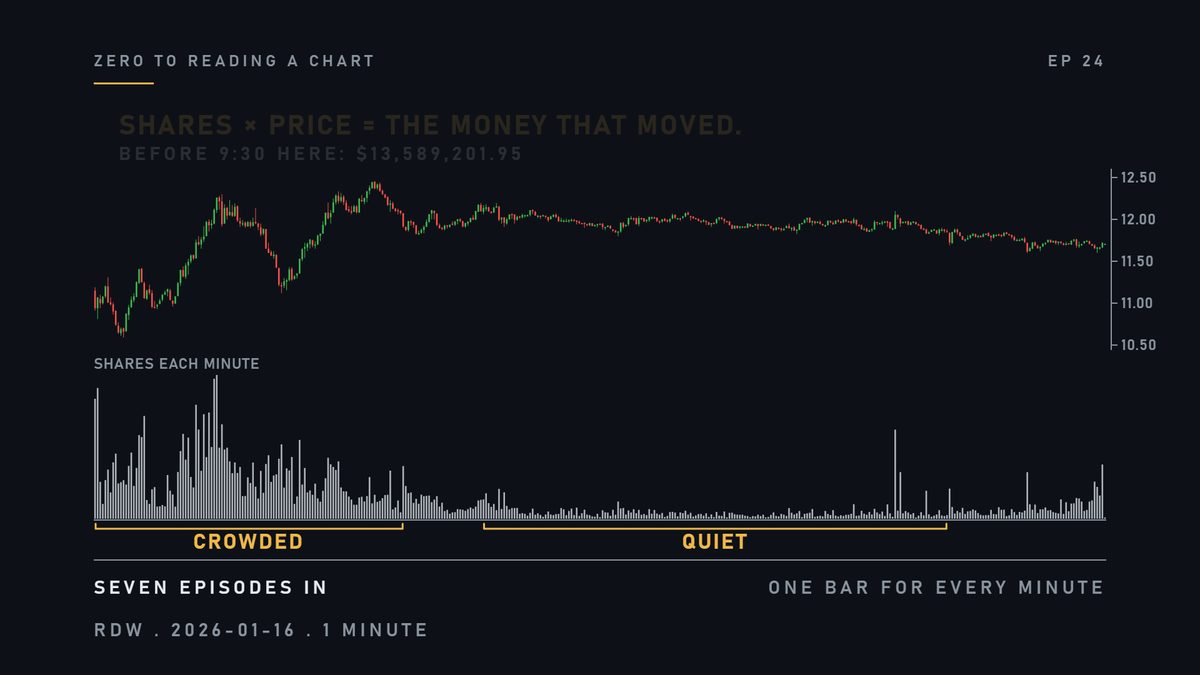
Shares times price is the money that moved, even before the bell.
A lot means against the stock's own normal: this day, two point two times. And there are always two prices.
The bid: the most a buyer will pay. The ask: the least a seller will take. Today, the distance between them.
Think of a second-hand shop. It buys your old phone for fifty dollars. It sells the same phone for fifty-eight.
Sell it your phone, then buy it straight back. Same phone, eight dollars less. That is why the shop is there.
A stock works the same way. The ask is the shop's selling price. The bid is its buying price.
Buy at the ask and sell at the bid, and you lose the difference. Its name is the spread. Ask minus bid.
The spread is what you lose buying and selling at once. It is the cost of starting.
Here is the arithmetic, on a drawn quote. Bid: fifty dollars and ninety cents. Ask: fifty dollars and ninety-eight.
Ask minus bid. Ninety-eight take away ninety is eight cents. That is the spread.
Buy at the ask. The best you can sell it for is eight cents less. Down eight cents. Instantly.
Eight cents sounds like nothing. So multiply it by a thousand shares.
That is eighty dollars, gone the second you own them. Not because the price moved. Because you crossed from one price to the other.
How wide the spread is tells you something. Here is a real day for a stock that trades all the time.
Every one of its three hundred and ninety minutes traded. Buyers and sellers were always there.
When buyers and sellers are always there, the two prices sit close. The spread is narrow.
Now imagine a stock that hardly trades. Nobody stands close on either side, so the spread opens wide. The wider the spread, the fewer people are there.
Spread is ask minus bid. Buy and sell in the same second, and you are down exactly the spread.
Narrow means it trades all the time. Wide means it does not.
Here is the mistake. Somebody believes buying costs nothing beyond the price.
Then they buy something with a wide spread, and are down before anything happens. Read both numbers first, and subtract.
Before any chart, find the bid and the ask, and subtract. That is what starting costs.
Remember this. The spread is what you lose buying and selling in one second. Narrow means it trades all the time.
Check yourself
- What is the formula for the spread?
- Ask minus bid.
- Buy at the ask, sell at the bid, instantly. The result?
- You are down exactly the spread.
- What does a wide spread tell you?
- Few people are there. It costs more to start.
Next lesson: Thin Stocks: Some Charts Are Fiction.
For learning only. Not financial advice, not signals, not stock picks.