 Trading Reps
Lesson 27 of 31 · Zero to reading a chart
What Is Float? Not Every Share Is for Sale
Shares outstanding is every share that exists; the float is the part actually available to trade - smaller, reported by a third party, possibly stale - and a smaller pool means the same buying or selling moves the price further, in either direction.
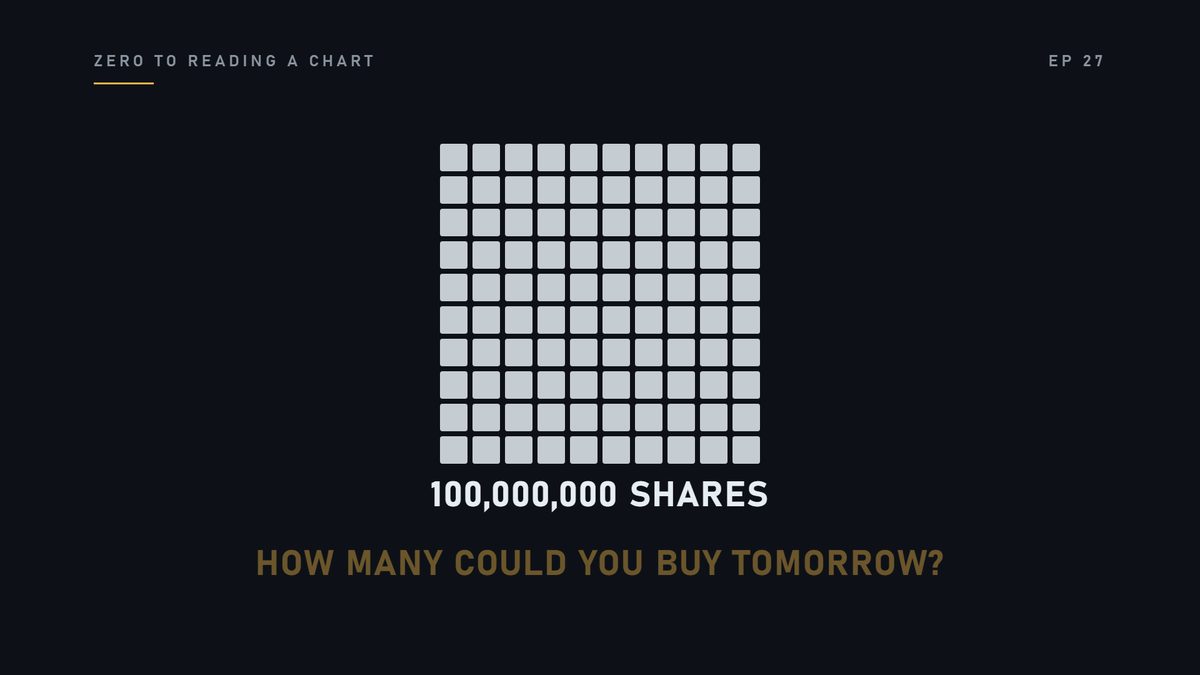
A company has a hundred million shares. How many of them could you buy tomorrow?
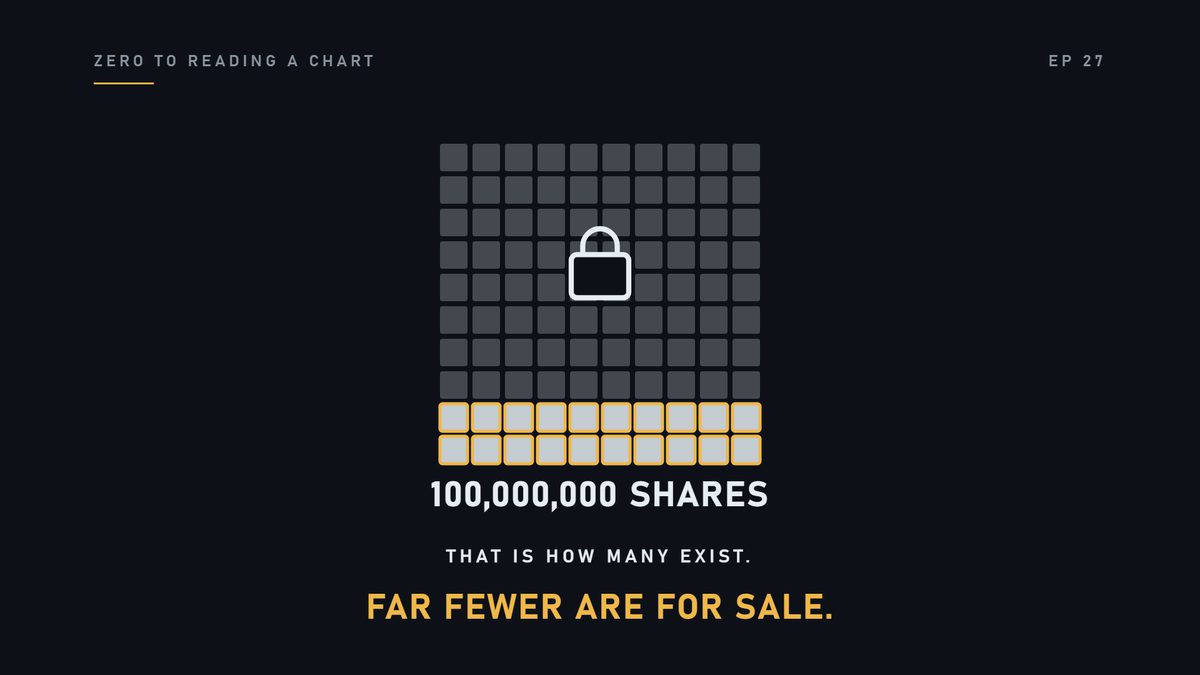
Most people say a hundred million. That is how many exist. Far fewer are for sale, and that changes how a chart moves.
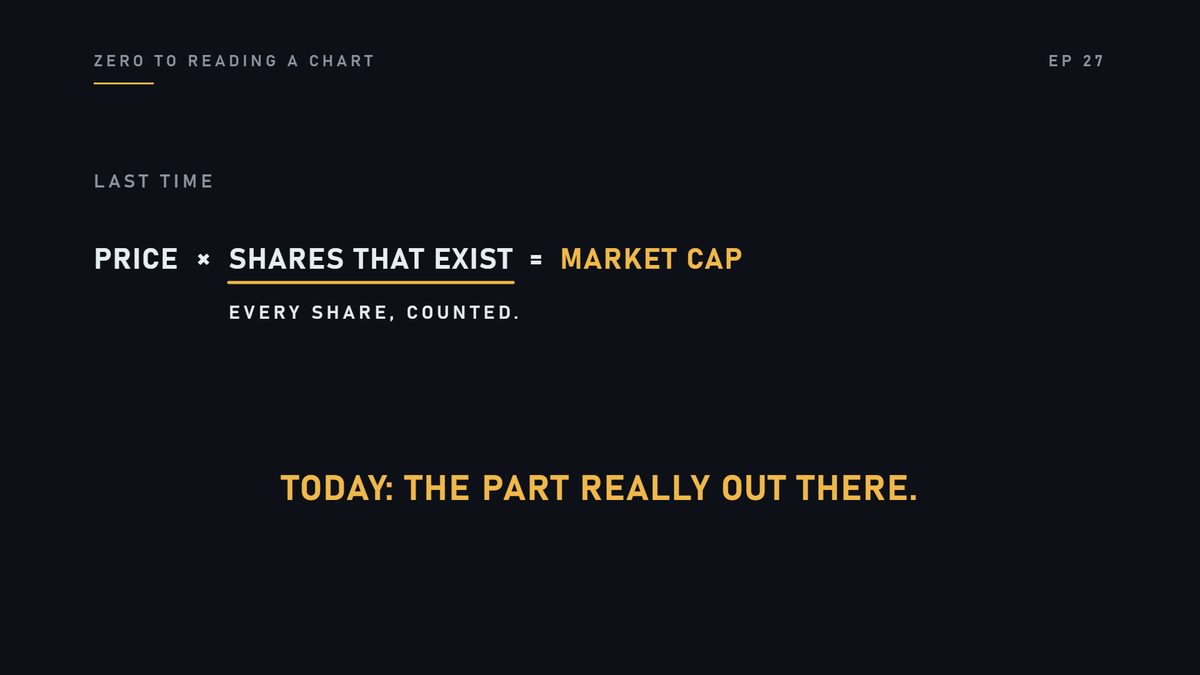
Last time: market cap is price times the shares that exist. Every share, counted. Today, the part that is really out there.

Think of a town with a thousand houses. A thousand exist. But most have families living in them, who are not moving.

Only the houses with a sign outside are for sale. That is the number that matters to a buyer.
A company is the same. Every share that exists is counted in shares outstanding.
Some are locked up. Held by founders, by insiders, by people who cannot or will not sell.
The rest, the ones that actually change hands, are the float. The part you can trade.
Two different numbers. Outstanding: every share that exists. The float: the part available to trade, so it is smaller.
Here is the real thing. One real company, on one real day.
Under the ticker, two numbers. Shares outstanding, from the company's own filing. And the float, below it.
Look at the gap between them. About thirty-two million shares sit outside the float. About seventeen of every hundred.
Now, why it matters to a chart. Imagine the same amount of buying arriving at two companies.
One has a huge float, a big pool. The buying spreads out, and the price barely notices.
The other has a small float, a small pool. The same buying has fewer shares to find, so the price moves further.
That is arithmetic, not a promise. Selling travels further too, and it says nothing about direction.
One more thing about that printed float. Look under it. Third-party data, updated irregularly.
It is not counted live. Treat it as a ceiling, and as a number that may be months old.
Outstanding is what exists. Float is what trades.
A smaller float means the same buying moves the price further. And the printed figure can be stale.
Here is the mistake. Somebody hears small float, and hears it will go up.
A small pool moves further in both directions. The float changes the size of a move. Not the direction.
Look up any stock's shares outstanding, and its float.
Notice how far apart they are.
Remember this. The float is what you can trade. Fewer shares, and the same buying travels further. Arithmetic, not a promise.
Check yourself
- What is the float?
- The shares actually available to trade.
- What does a smaller float change?
- How far the same buying or selling moves the price.
- Is the printed float number exact?
- No. It is reported, and it can be stale.
Next lesson: four companies, same day, same shape.
For learning only. Not financial advice, not signals, not stock picks.