 Trading Reps
Lesson 20 of 31 · Zero to reading a chart
Volume vs Dollar Volume: 10M Shares Is Not 10M Shares
Share volume counts pieces, not money; multiply shares by price and you get dollar volume, the actual money that changed hands - two real days with nearly the same share count moved $118 million and $921 million.
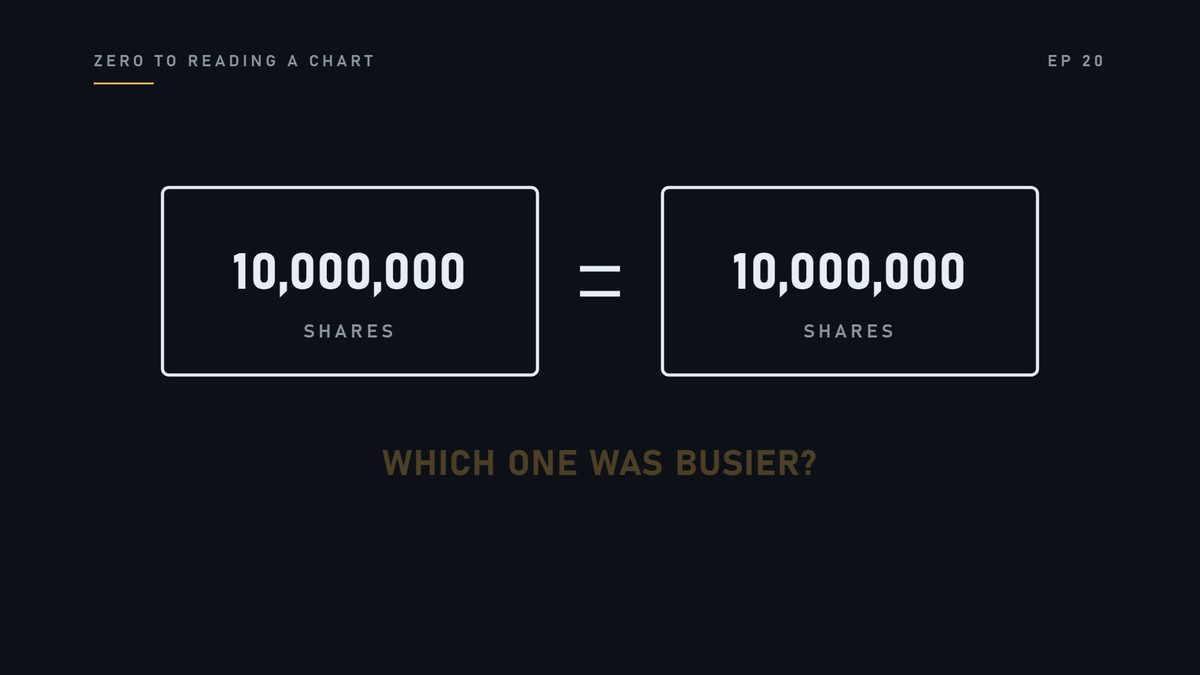
Two stocks. Both traded ten million shares today. Which one was busier?
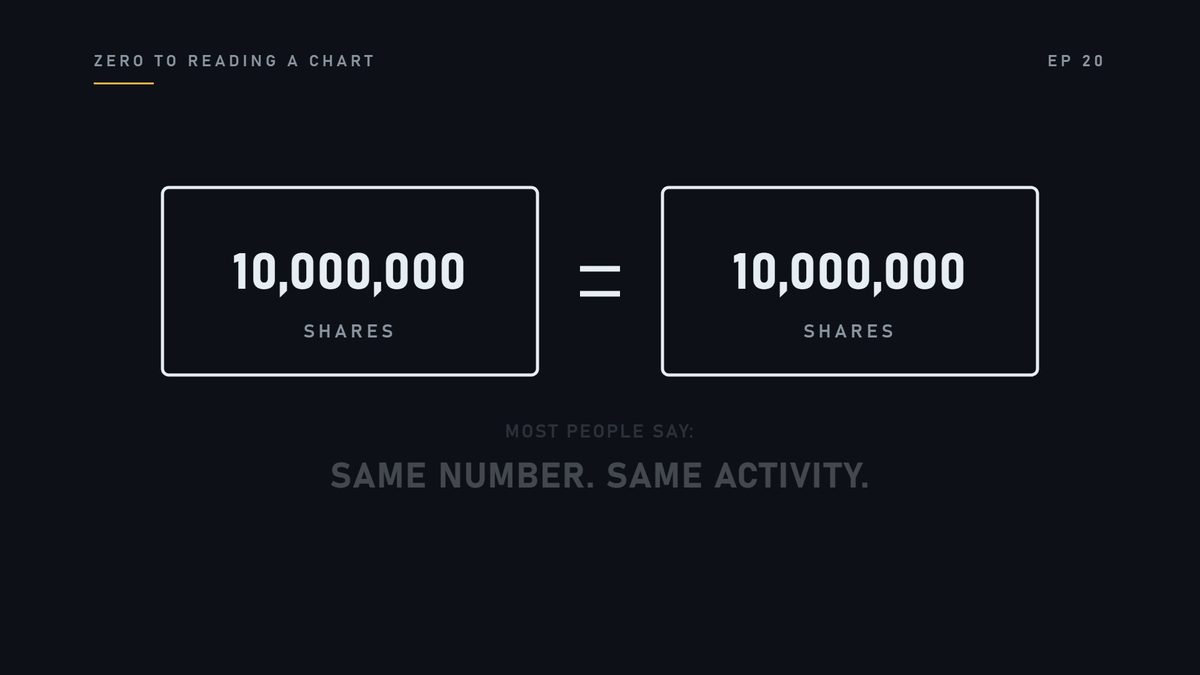
Most people say they were equally busy. Same number, same activity.
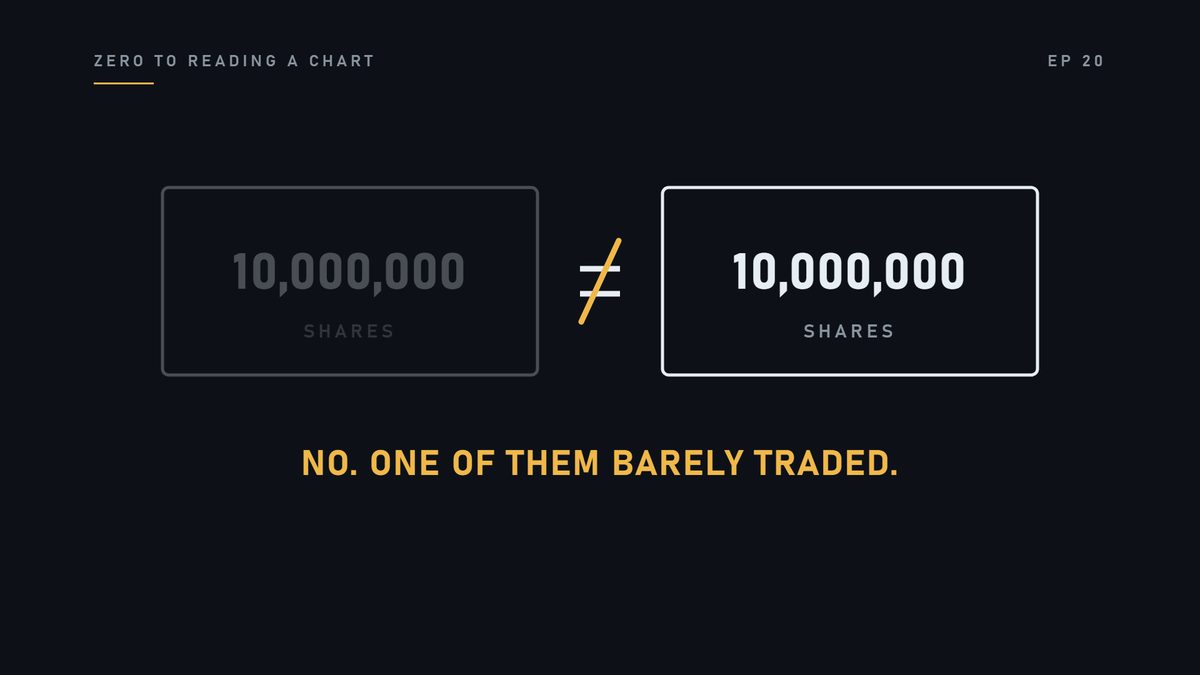
No. One of them barely traded at all.
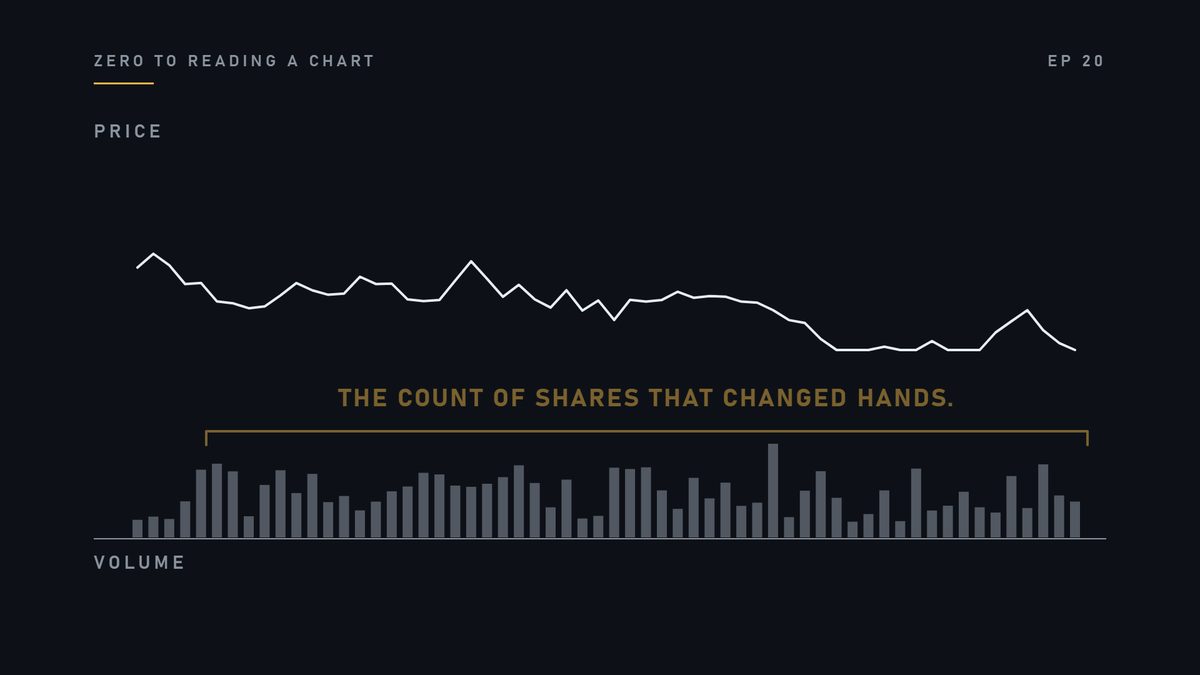
Volume, in case you need it, is the count of shares that changed hands.
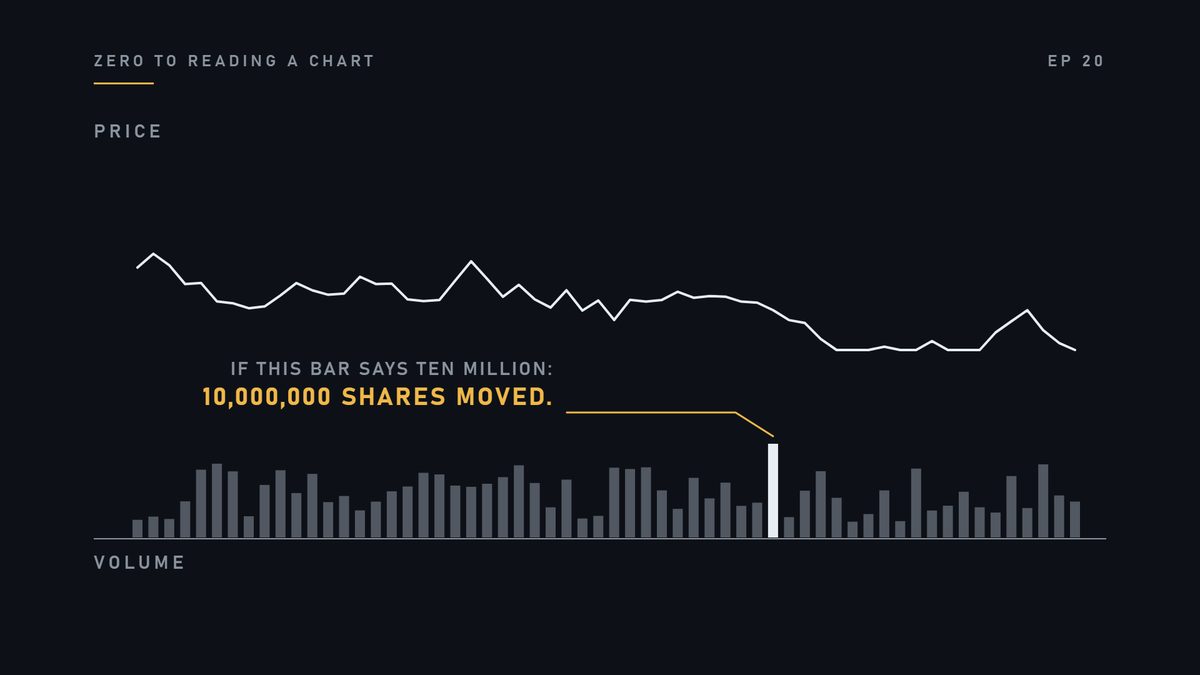
If the row under the chart says ten million, ten million shares moved.
Here is the problem with counting shares. A share is not a fixed amount of anything.
One company's share costs fifty cents. Another company's share costs eighty dollars.
Counting shares is like counting bags without asking what is in them.
So do the obvious thing. Multiply. Ten million shares at fifty cents is five million dollars.
Ten million shares at eighty dollars is eight hundred million dollars.
Same share count. A hundred and sixty times the money.
That second number has a name. Shares times price is dollar volume. It is the actual amount of money that changed hands.
Here are two real sessions. Look at the share volume on each.
Forty-two point six million shares. Forty-three point seven million. Nearly the same number.
Now watch what happens when we multiply each one by its own price.
A hundred and eighteen million dollars. Nine hundred and twenty-one million dollars.
The two bars that were equal a second ago are not equal any more. Nearly eight times the money.
Share volume counts how many pieces moved. Dollar volume counts how much money moved.
Want to know whether a day was busy? The money is the honest number.
Here is the mistake. Somebody screens for stocks with high volume. They get a list of very cheap stocks with enormous share counts.
They think they have found the busiest names of the day. They have found the cheapest ones. Nothing more.
This is also why you cannot compare two stocks' volume directly. Ten million shares means something different at fifty cents and at eighty dollars.
Convert both to dollars, and you can finally compare them.
Take any two stocks on your screen. Work out both dollar volumes. The bigger share count is not always the bigger day.
Remember this. Ten million cheap shares are not ten million expensive ones. Multiply by the price.
Check yourself
- What is the formula for dollar volume?
- Shares times price.
- Cheap stock, huge share count. Busy or not?
- Not necessarily. Multiply by the price first.
- Why does counting shares alone mislead you?
- A share is not a fixed amount of money.
Next lesson: "A lot of volume" - compared to what?.
For learning only. Not financial advice, not signals, not stock picks.